Troubleshooting guide › Specialised welding › Tube-to-tubesheet welding
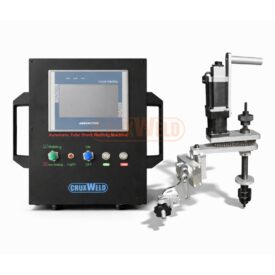
A heat-exchanger tube weld is a small circle, hundreds of times over, and every one must be leak-tight. The machine takes the operator’s hand out of it: a mandrel centres the head in the tube, the torch rotates through a set angle and returns. What is left for the operator is the set-up: centring, tube projection, torch angle and offset, the start and stop overlap, and clean, dry tubes. Those are where leaks come from.
Reviewed by the Cruxweld technical team, October 2026. Settings are starting points to confirm on a test piece; acceptance is decided by the code or drawing the job is built to. Checks marked “call” are for our technical team.
Lack of fusion into the tubesheet or the tube at one part of the circumference: torch off-centre, projection wrong so the arc favours one side, dirt or moisture in the tube-to-sheet gap, expansion not done or done after welding.
Stop lands on the start without overlap, or the crater is not filled; wire burnback leaving a ball; gas post-flow short.
Head not square (positioning block worn or not seated), torch angle changing as the cable wraps, speed uneven, tube not round or not flush with its neighbours.
Too much current or too slow for a thin tube; torch aimed too far onto the tube; projection too long.
Torch aimed at the tube; current too low for the thick sheet; sheet cold on the first tubes of a cold morning.
No tube metal to form a fillet; the joint needs a groove or a filler-added seal weld with the torch angled into the sheet.
Gas, nozzle and tip as on any MIG weld; oil from tube rolling left in the joint.
Lock nut not tight; tensioning block undersized for the bore; worn faces.
Usually a light expansion before welding to close the gap and hold the tube, then the strength expansion after welding so it does not stress the fresh weld. Follow the exchanger drawing or code; it decides.
Rotate the head on manual speed with the arc off and watch the tip-to-joint distance all the way round; it should not change. Then weld one tube and macro-section it.
Open your model for its specifications; the spares page lists the consumables for it.
If the machine runs but the weld or cut is wrong, the cause is usually settings, consumables or the material. Start here:
The head gives repeatable centring and rotation; the MIG source and feeder give the arc. A fault that appears on every tube is set-up or consumables; a fault that appears on one tube is fit-up or cleanliness of that tube. Our team sets the first joints with your operator on a video call.
Send a photo of the weld or cut, your machine model, consumable and plate thickness. Our technical team replies on WhatsApp with the likely causes and the next checks to make.
45+ years of welding expertise · GeM Registered OEM Manufacturer · Supported Worldwide