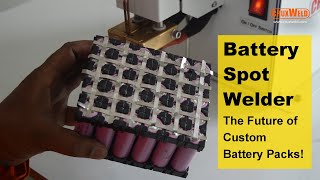
Lithium Battery Spot Welding Machine | CBS10M 10 kVA Double Pulse Battery Tab Spot Welder

CBS10M
Battery tab spot welder · 10 kVA · double pulse

Dual-pulse welds in milliseconds. No sparks, no discolouration, no heat into the cell.

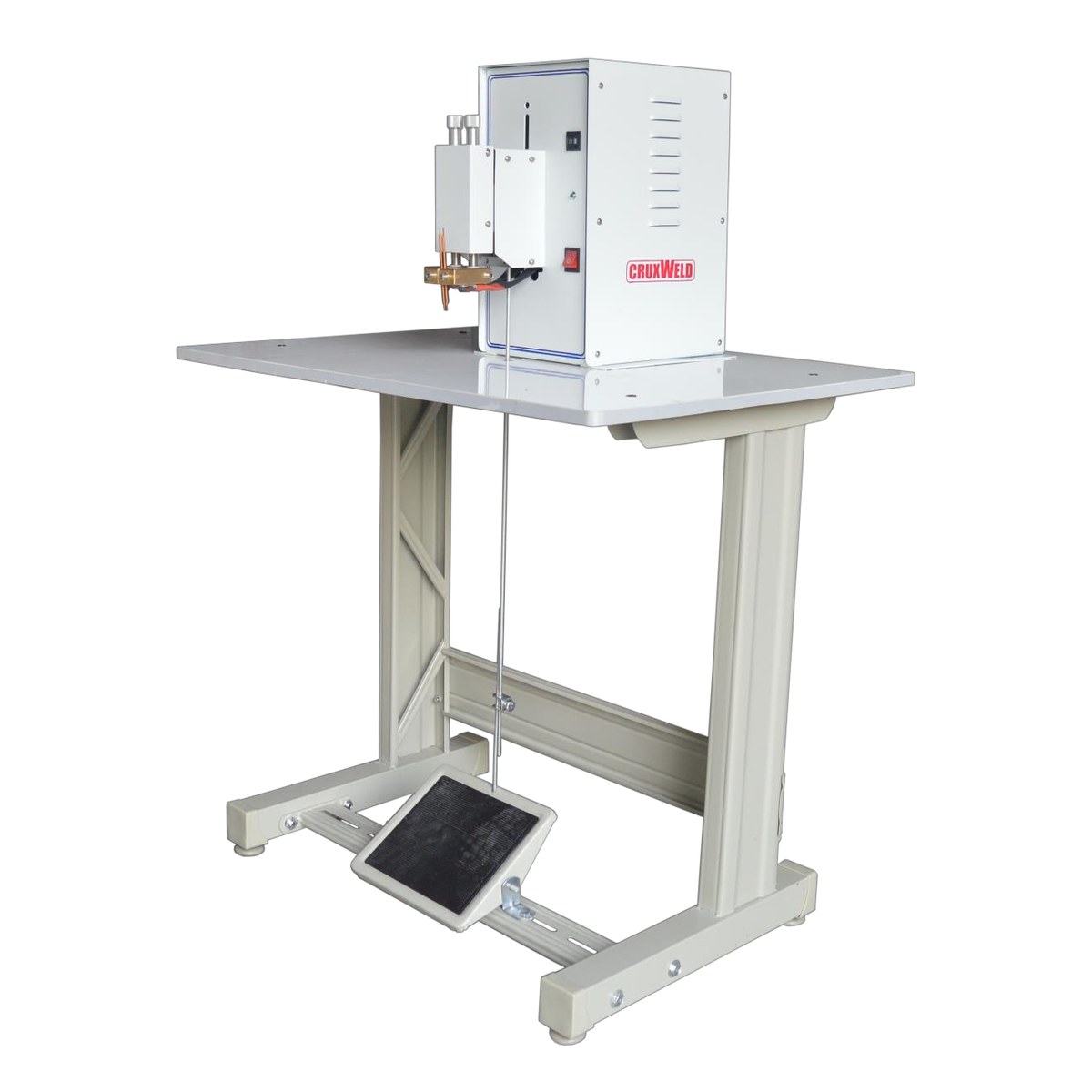
The CRUXWELD CBS10M is a 10 kVA lithium battery spot welding machine for 18650 and cylindrical cell packs. A powerful DC supply delivers up to 3500 A in a double-pulse weld that fixes 0.02–0.3 mm pure nickel or nickel-alloy strip to the cell without changing the battery’s characteristics; the weld spot keeps the colour of the strip. Pedal-operated, 0–99% energy adjustment, electrode force 0.5–4 kgf, on a 230 V single-phase supply.

One pedal press per cell: two spots, no sparksDOUBLE PULSE1: seat2: weldtime: millisecondsup to 3500 A

10 kVAOutput power
3500 AMax current
0.02–0.3 mmNickel strip
0–99%Energy steps

GeM Registered OEM Manufacturer · Made in India · Supported Worldwide · 45+ years of welding expertise

Price, delivery & technical help — get a fast response.

Overview

Overview

Lithium battery spot welding machine for 18650 packs

A lithium battery spot welding machine joins the nickel strip to the cell terminal with a resistance weld lasting milliseconds, fast enough that the cell never sees the heat.

The CBS10M does it with a double pulse: the first pulse cleans and seats the strip, the second makes the weld. The result is a firm, uniform spot with practically no sparks, no burn marks and no discolouration, on every cell in the pack.

With 10 kVA and 0–99% precise energy adjustment it moves from thin 0.02 mm strip on small cells to 0.3 mm strip on power packs without changing electrodes. Operation is by foot pedal, so both hands stay on the pack; electrode travel is 15 mm and force is set from 0.5 to 4 kgf for the strip in use.

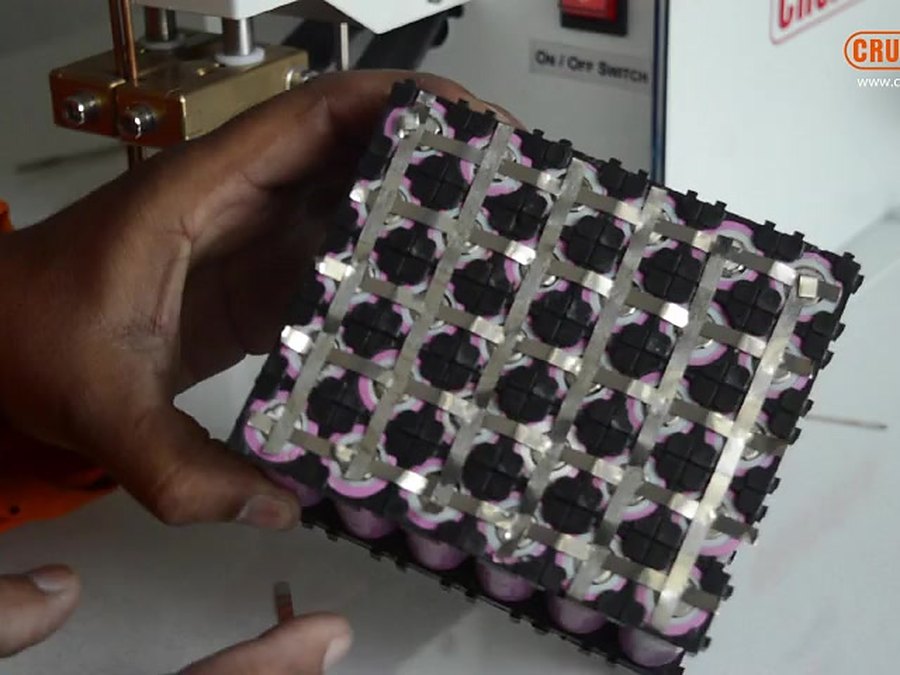
Lithium battery spot welding machine CBS10M – 18650 battery pack with nickel strip welded
18650 pack after welding on the CBS10M: uniform spots, no discolouration.
  1. No heat into the cellMillisecond double pulse: the battery’s characteristics are unchanged.
  2. Firm, repeatable spotsDC power with 0–99% energy control gives the same weld on cell 1 and cell 1000.
  3. Phone cells to power packs0.02–0.3 mm pure nickel or nickel alloy strip; low current to high current in one turn of the dial.
  4. Pedal operatedBoth hands free to position the pack and strip; 230 V single-phase supply.
See it work

The CBS10M lithium battery spot welding machine on an 18650 pack

Play video

What you will see

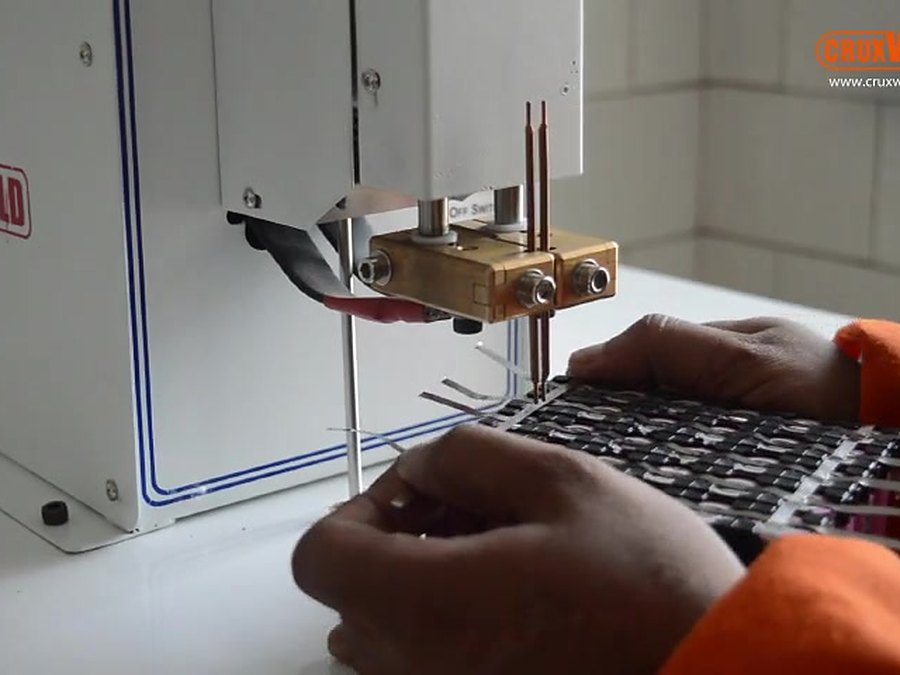
  1. 1Nickel strip laid across a tray of 18650 cells and brought under the twin electrodes.
  2. 2One pedal press per cell: two spots at once, no sparks, no flash.
  3. 3The finished pack: uniform spots, strip colour unchanged, no heat marks on the cells.
  4. 4How the operator moves cell to cell without any pause for cooling or electrode dressing.

Filmed on a production CBS10M. Ask us on WhatsApp for a live video demonstration on your own cells and strip.

How it works

Why double pulse makes a better battery weld

Slowed down from a few milliseconds to a few seconds. Tap to compare with a single-pulse weld.

CELL TERMINALForce 0.5–4 kgfNickel stripTwin Ø3 mmelectrodesoxide / platingLifts 15 mm: next cellTwo firm spots, strip colour unchangedwelding currentCELL TERMINALForce 0.5–4 kgfNickel stripTwin Ø3 mmelectrodesSparks, burn marks, uneven spotswelding current
  1. 1. PositionLay the nickel strip across the cell terminals and bring the pack under the twin Ø3 mm electrodes. Set force (0.5–4 kgf) and energy (0–99%) for the strip.
  2. 2. First pulsePress the pedal. The first pulse burns through surface oxide and plating and seats the strip flat on the terminal.
  3. 3. Second pulseThe main pulse, up to 3500 A for milliseconds, fuses strip and terminal. The strip is already seated, so the weld is uniform and nothing sparks.
  4. 4. Next cellElectrodes lift 15 mm; move the pack to the next terminal. No cooling pause, no electrode dressing between cells.

Single pulse: one hard pulse hits a strip that is not yet seated on oxide and plating. That is what makes sparks, black burn marks and spots that vary from cell to cell.

This is resistance spot welding tuned for batteries: minimal heat input, no filler, and a joint that keeps the full conductivity of the nickel strip.

One machine, every strip

Thin strip or thick: set it with one dial

From 0.02 mm to 0.3 mm pure nickel or nickel alloy on the same lithium battery spot welding machine, without changing electrodes. Pick a strip to see what changes.

FORCE0%99%PULSE ENERGYStrip on the cell terminal

Thin strip

Thickness
Towards 0.02 mm
Typical use
Small cells and phone-battery tabs
Pulse energy
Low on the 0–99% dial
Electrode force
Light, towards 0.5 kgf

Medium strip

Thickness
Common pack strip
Typical use
Laptop, e-bike and power-tool packs
Pulse energy
Mid-range
Electrode force
Medium

Thick strip

Thickness
Up to 0.3 mm
Typical use
High-current power packs
Pulse energy
High on the 0–99% dial
Electrode force
Firm, towards 4 kgf

Our technical team confirms the exact energy and force for your strip and cell type before dispatch.

Why buyers choose it

What the CBS10M fixes on the battery line

  • ✕“Our welds spark and blacken the strip.”

    DC double-pulse welding leaves the spot the same colour as the strip, with practically no sparks.

  • ✕“Cells get hot and lose capacity.”

    Millisecond pulses keep heat out of the cell; the battery’s characteristics do not change.

  • ✕“Thin strip tears, thick strip won’t weld.”

    On this lithium battery spot welding machine 0–99% energy and 0.5–4 kgf force cover 0.02 mm to 0.3 mm on one machine.

  • ✕“Pneumatic lines are not available here.”

    Mechanical pedal drive: nothing but a 230 V socket needed. Have shop air and higher volume? See the CBS10P pneumatic 10 kVA.

Key features

A lithium battery spot welding machine built for pack assembly

  • 10 kVA DC power supplyUp to 3500 A from a lithium battery spot welding machine, for firm welds in a very short time.
  • Double pulse weldingSeat-then-weld sequence for firmer, cleaner spots.
  • 0–99% pulse energyPrecise adjustment for every strip thickness and cell type.
  • Adjustable electrode force0.5–4 kgf, easily set for the job.
  • Ø3 mm electrodes, 15 mm travelTwin electrodes with generous lift for pack handling.
  • CE certificateCompliance documented on the datasheet; 800 × 580 mm workbench.
What it welds

Cells, strips and pack types

The CBS10M is for pure nickel and nickel-alloy strip from 0.02 to 0.3 mm on:

18650 & cylindrical Li-ion packsLaptop battery packsE-bike & power-tool packsLi-ion anode / cathode tabsNickel–aluminium composite tapeProtective welding platesNiMH & NiCd combinationsMobile phone battery tabs

Our technical team will confirm energy and force settings for your strip and cell type on this lithium battery spot welding machine.
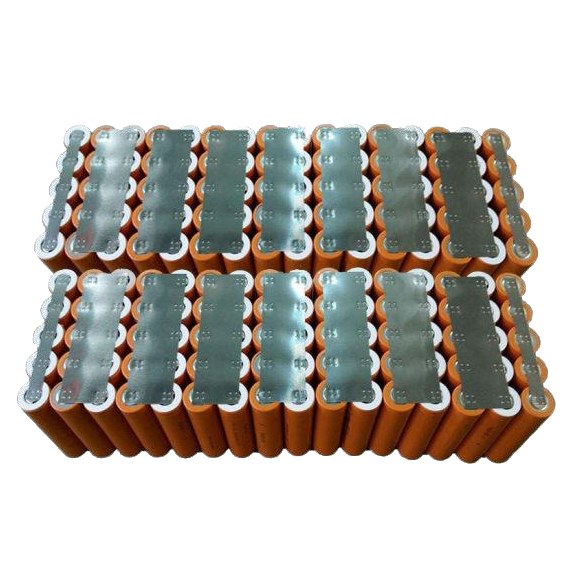
Welded samples from a battery tab spot welder – nickel strip on cylindrical lithium cells
Welded samples: nickel strip on cylindrical lithium cells.
Applications

Who uses the CBS10M

  • Battery pack assemblersA lithium battery spot welding machine for e-bike, e-rickshaw, UPS and power-tool packs built from cylindrical cells.
  • Laptop & electronics repairRebuilding laptop and device packs with new 18650 cells.
  • Solar & storage integratorsLithium storage packs assembled in-house.
  • EV start-ups & R&DPrototype packs where every cell weld must be consistent.
  • Training institutesTeaching battery assembly on a simple, safe pedal machine.
  • Electronics manufacturersTab welding on NiMH and NiCd combinations.
CRUXWELDBoth hands stay on the pack1. Press the pedal2. Electrodes down3. Weld, thenlift 15 mm
Scope of supply

What arrives with the CBS10M

  • CBS10M welding head and 10 kVA power unit on 800 × 580 mm workbench
  • Foot pedal mechanical drive
  • Twin Ø3 mm electrodes fitted
  • Power cable
  • Test certificate

The lithium battery spot welding machine is supplied ready to weld; spare electrodes and nickel strip are ordered separately; the exact scope is confirmed on the quotation.
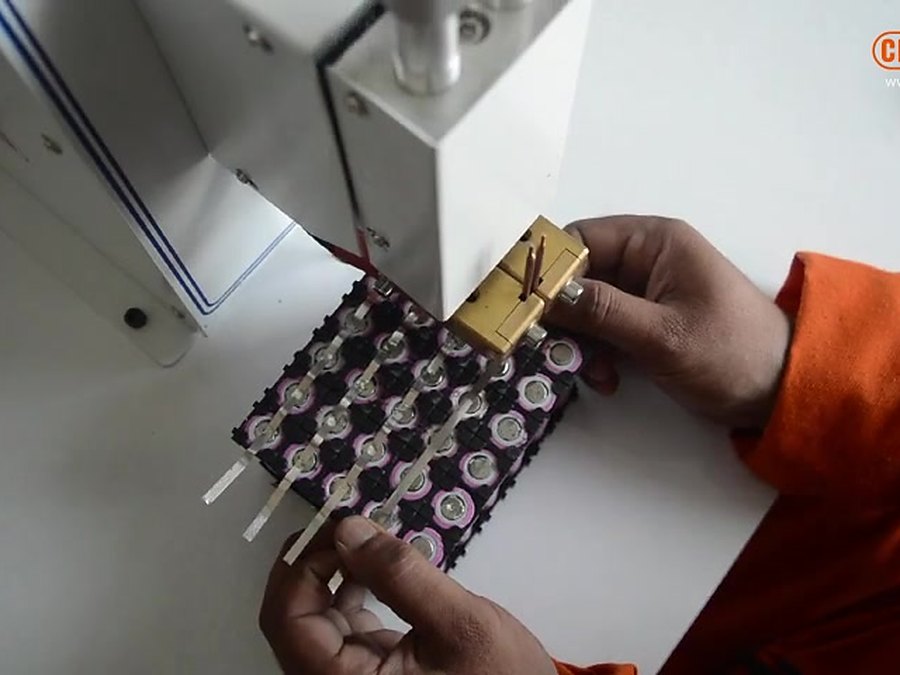
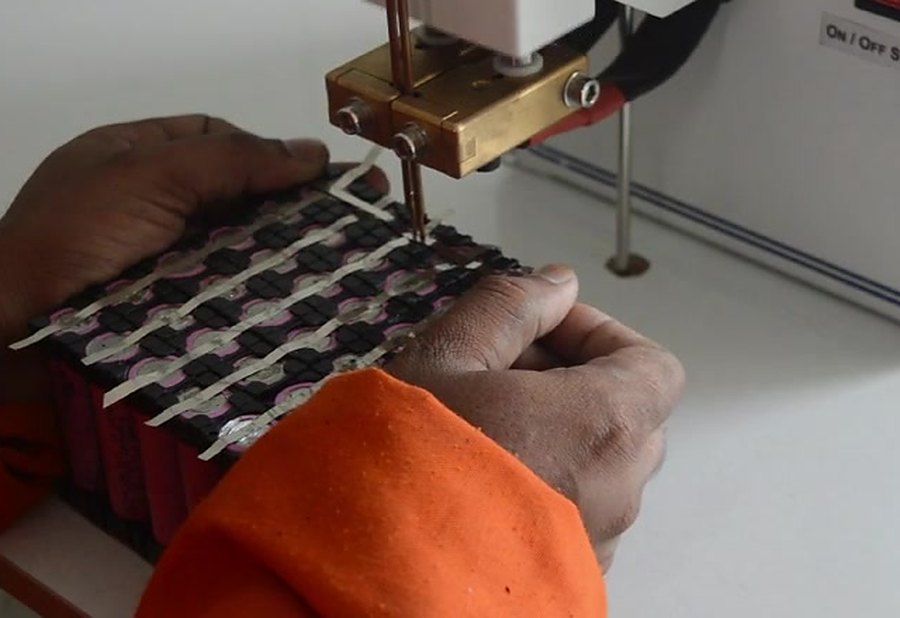
CBS10M pedal-operated battery spot welding machine in use
Pedal operation keeps both hands on the pack.

Other CRUXWELD battery tab welders:CBS10P pneumatic 10 kVA (air-driven electrode force for production lines), CLB5H hand-operated, CLB5D pedal-operated and CLB5P pneumatic 5 kVA models for lighter duty. See the full range on our products page.

Why buy from CRUXWELD

Made in India, supported worldwide

  • 45+ years of welding expertiseThis lithium battery spot welding machine is designed, built and tested by CRUXWELD engineers in India; our technical team answers on WhatsApp.
  • ISO 9001:2015Every machine is load tested and inspected before dispatch.
  • GeM Registered OEM ManufacturerTender-ready documentation for government, PSU and institutional buyers.
  • Pan-India supply, export readyDispatched across India and exported; electrodes and spares in stock.

Tell us your cell type and strip thickness: we will confirm settings and send a quotation today.

Specifications

Specifications

CBS10M Technical Specifications

ParameterCBS10M
ModelCBS10M
Output power10 kVA
Control modePedal type
Welding current0 – 99% adjustable
Maximum output current3500 A
Working voltageAC 230 V ±10%
Frequency50/60 Hz
Welding methodDouble pulse
Electrode pressure0.5 – 4 kgf
Welding thickness0.02 – 0.3 mm
Welding materialPure nickel or nickel alloy strip
Drive styleMechanical (pedal)
Electrode diameterØ 3 mm
Electrode travel length15 mm
Operation temperature−20 to 48 °C
ComplianceCE certificate
Workbench size800 L × 580 W mm
Dimensions (L × W × H)800 × 580 × 1100 mm
Weight58 kg

Specifications from the CRUXWELD CBS10M datasheet; subject to improvement without notice. The quotation and test certificate supplied with the machine are the governing documents. Warranty terms are stated on the quotation / invoice.


Question & Answers

FAQ

Lithium Battery Spot Welding Machine — Frequently Asked Questions

?What is the CBS10M lithium battery spot welding machine used for?
Tab welding pure nickel or nickel-alloy strip (0.02–0.3 mm) onto cylindrical lithium cells such as 18650s when building or repairing battery packs, and onto NiMH / NiCd combinations and Li-ion anode or cathode tabs.
?What does double pulse welding do?
The first pulse cleans and seats the strip on the terminal; the second makes the weld. The spot is firmer and more uniform, with practically no sparks and no discolouration compared with a single-pulse weld.
?Will the weld heat damage the cells?
No. The weld lasts milliseconds, so the heat input is too small to change the characteristics of the battery being welded.
?What strip thickness can it weld?
0.02 mm to 0.3 mm pure nickel or nickel alloy, with the energy set anywhere from 0 to 99% and electrode force from 0.5 to 4 kgf.
?What power supply does the lithium battery spot welding machine need?
A single-phase AC 230 V (±10%), 50/60 Hz supply. Output is 10 kVA with a maximum welding current of 3500 A.
?Is this lithium battery spot welding machine pedal or pneumatic?
The CBS10M is pedal-operated with a mechanical drive, so it needs no compressed air. For a pneumatic unit see the CLB5P; for a hand-operated unit the CLB5H.
?Is it CE certified?
Yes, the CBS10M carries a CE certificate as listed on its datasheet.
?How do I get the price and delivery time?
Request a quote on this page or message +91 88008 82983 on WhatsApp with your cell type, strip thickness and monthly pack quantity. You will receive a GST quotation with delivery time, usually the same working day.
Tell us your cell type and strip thickness — we will confirm settings and send a quotation today.

Join the Conversation

  1. Avatar

1 Comment

Load More

Leave a comment

Your email address will not be published. Required fields are marked *

Lithium Battery Spot Welding Machine | CBS10M 10 kVA Double Pulse Battery Tab Spot Welder

WhatsApp chat