Troubleshooting guide › Fix it yourself, by machine › Spot welders
A spot welder is a transformer, a timer, a mechanism and two copper tips. When the weld goes bad, it is the tips nine times out of ten; when the machine does nothing, it is the initiation switch, the foot pedal, the air or a fuse. This page covers pedal-operated rocker-arm machines, pneumatic machines, hanging guns and portable hand-operated spot welders.
Reviewed by the Cruxweld technical team, October 2026. Settings are starting points to confirm on a test piece; acceptance is decided by the code or drawing the job is built to. Checks marked “call” are for our technical team.
| What you see | Check yourself | If it persists |
|---|---|---|
| POWER lamp off | Supply; main switch; timer switch ON; supply fuse | Call |
| Pedal pressed, tips closed, no weld, weld lamp off | Initiation switch not reached (increase spring tension), switch adjustment; timer fuse | Switch or timer: call |
| Weld lamp on, no weld | Oxidised arm seats or electrode tapers; loose secondary connection; tap switch contact | Tap switch or transformer: call |
| Weld only sometimes | Foot switch or initiation switch intermittent; control plug loose | Switch: call |
| Electrodes, arms or transformer hot | Cooling water flow; blocked passages (flush); transformer vents; duty cycle | Call if hot with good water flow |
| Pneumatic: slow or weak stroke, or no stroke | Air pressure at the regulator; FRL filter blocked or full of water; lubricator oil above a quarter; foot switch; solenoid click | Cylinder seals or valve: call |
| Hanging gun does not close (AeroSpot) | Air at 0.6 MPa to the FRL, working pressure 0.3-0.5 MPa; foot switch; program A/B switch | Valve: call |
| Hand-operated spot welder: no output | Plugged in; building breaker; power switch | Switch: call |
| Weld lamp stays on / timer runs long | Timer setting; worn switch | Timer: call |
| What you see | Change first | Then |
|---|---|---|
| Weak weld, sheets peel apart | Dress and align the tips | Tap up one step or more cycles; clean sheets; check supply |
| Sparks, expulsion, holes | Increase force (spring or air) | Tap down one step; clean sheets; dress tips; more squeeze time |
| Deep indentation | Larger tip face | Fewer cycles; lower current and force |
| Tips stick to the sheet | Clean and dress; check water | Lower current or raise force; coated sheet needs more force |
| Tips overheat | Water flow; force | Shorter weld time; material within rating; longer rest |
| Weld off-centre or one side only | Align tips; tighten arm bolts | Dress both tips the same |
| Long weld time needed (hand welder) | Dress tips; clean sheets | Check supply voltage |
Tips were dressed yesterday and have mushroomed, or the water is off and the tips are soft, or a big motor on the same line is dragging the voltage. In that order.
No. Without a timer every weld is a different length and the tips burn. Timers are a stock spare; message us the model.
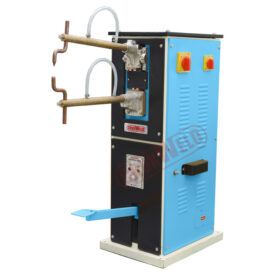 Pedal operated spot welder (CSP-15)Specifications →
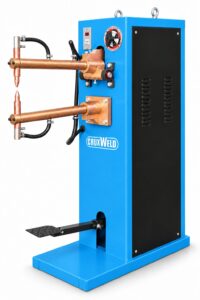 ROKR 16K pedalSpecifications →
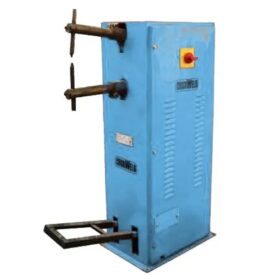 Foot operated spot welderSpecifications →
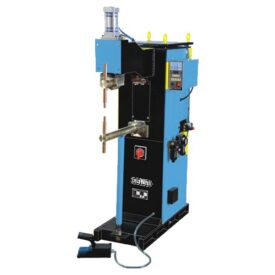 Pneumatic spot welderSpecifications →
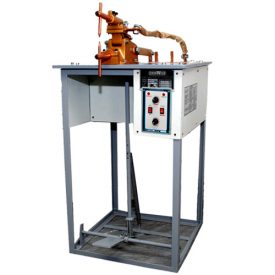 Table mounted spot welderSpecifications →
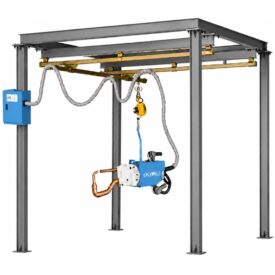 AeroSpot 35 hangingSpecifications →
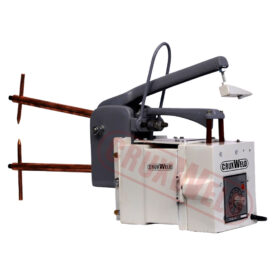 Hand operated spot welderSpecifications →
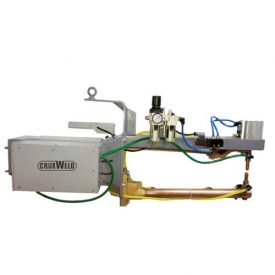 Spot welding gunsSpecifications →
Open your model for its specifications; the spares page lists the consumables for it.
If the machine runs but the weld or cut is wrong, the cause is usually settings, consumables or the material. Start here:
Made in India with spares on the shelf: tips, arms, timers and foot switches for every model we sell. A spot welder that is dressed on a schedule and cooled properly runs for decades.
Send a photo of the weld or cut, your machine model, consumable and plate thickness. Our technical team replies on WhatsApp with the likely causes and the next checks to make.
45+ years of welding expertise · GeM Registered OEM Manufacturer · Supported Worldwide

