Set It on the Plate. Let the Rollers Find the Joint.
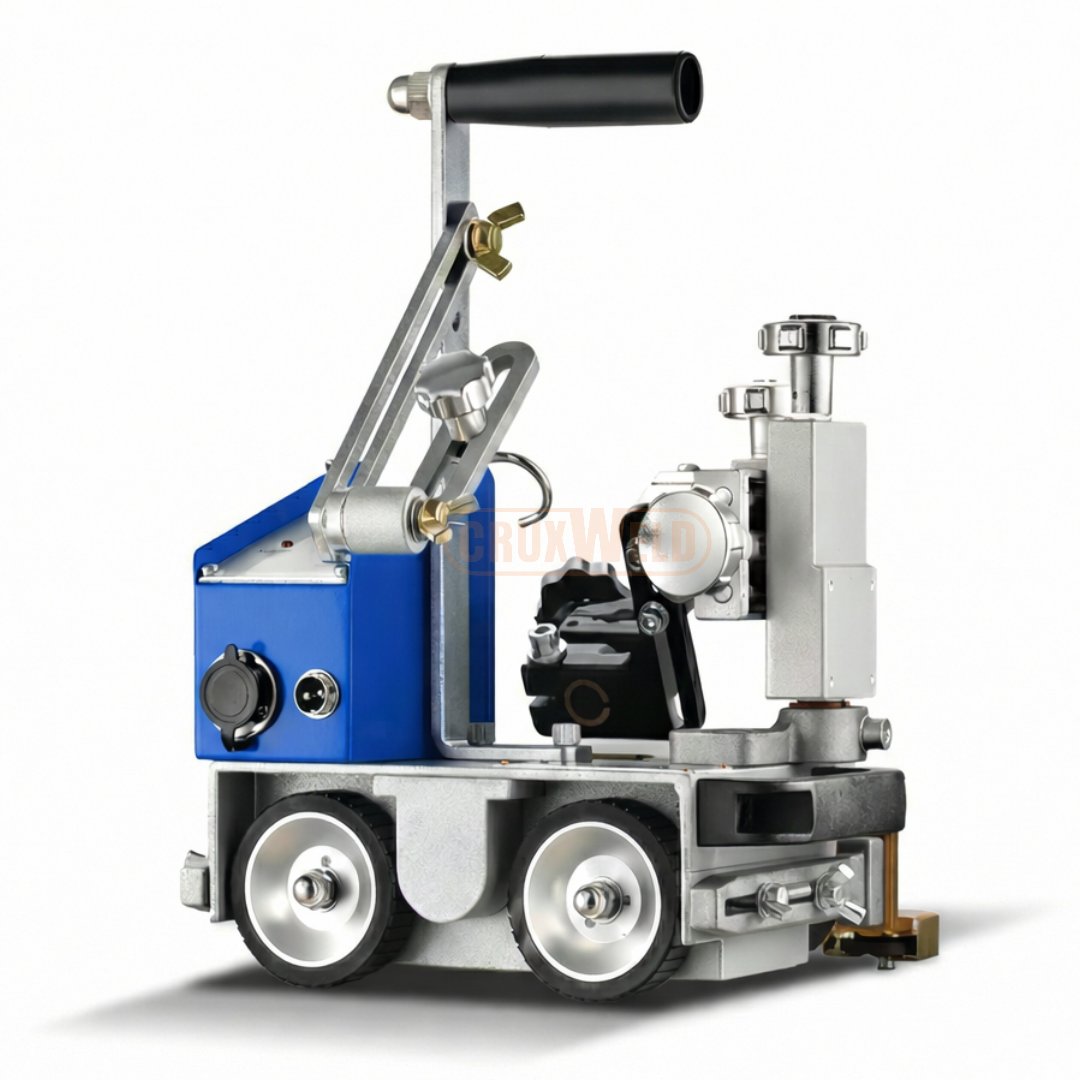
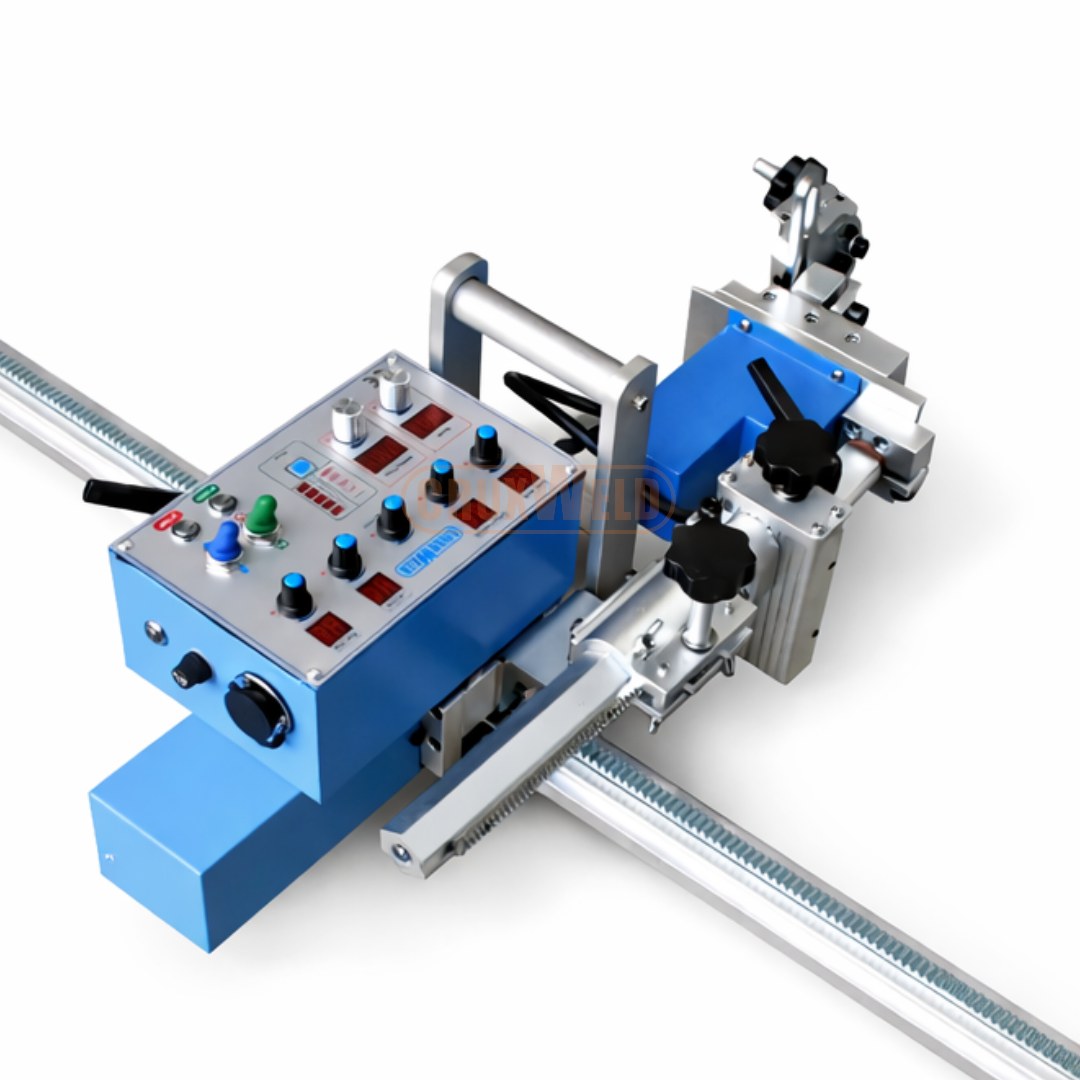
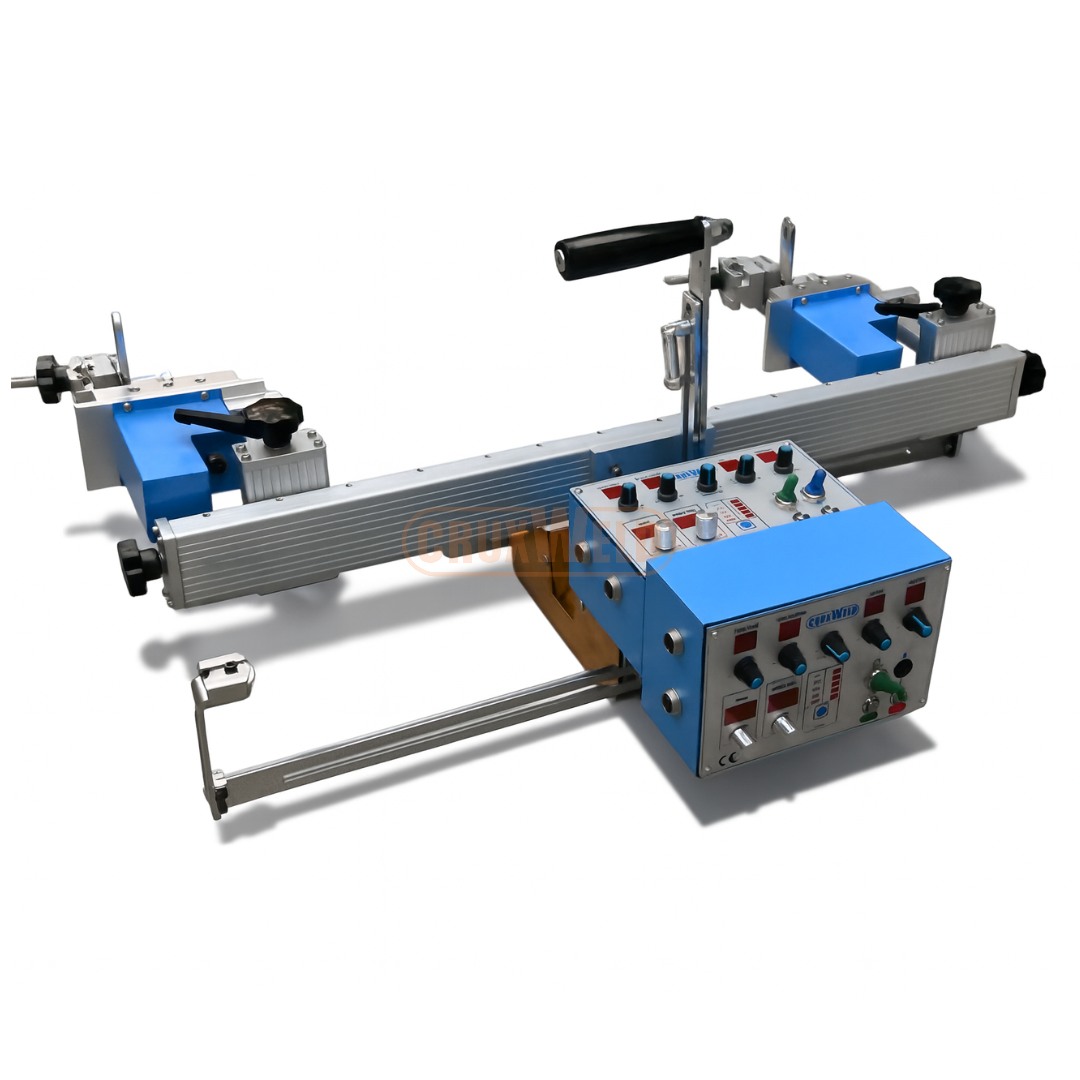
The CRUXWELD WeldyFi is a portable fillet welding carriage that needs no track. A lever-switched magnet holds it on the steel, brass guide rollers run against the web plate, and four-wheel drive carries your MIG/MAG torch along the fillet at a steady 5–1100 mm/min.
Long fillet welds on stiffeners, beams and panels are where hand welding loses time and consistency: the welder tires, travel speed drifts and the leg size wanders. The WeldyFi takes over the travel. Set it on the plate, drop the magnet lever, let the guide rollers rest against the web and press start.
Its motor runs with encoder feedback through a planetary gearbox, so the speed you set on the knob is the speed it holds along the joint. The torch sits in a quick-attach clamp on an X-Y slide, so the wire lands exactly in the root of the fillet and stays there.
TRACKLESS
No track, no set-up time
Magnet plus guide rollers keep it on line.
SPEED
Steady travel
5–1100 mm/min, held by encoder feedback.
X-Y SLIDE
Fine torch placement
50 mm up/down and 50 mm left/right slide.
POSITIONS
Any position
Fillet, V-groove, overhead and out of position.
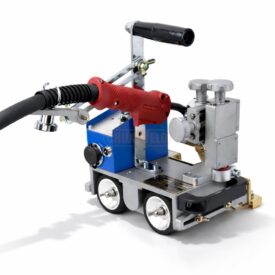
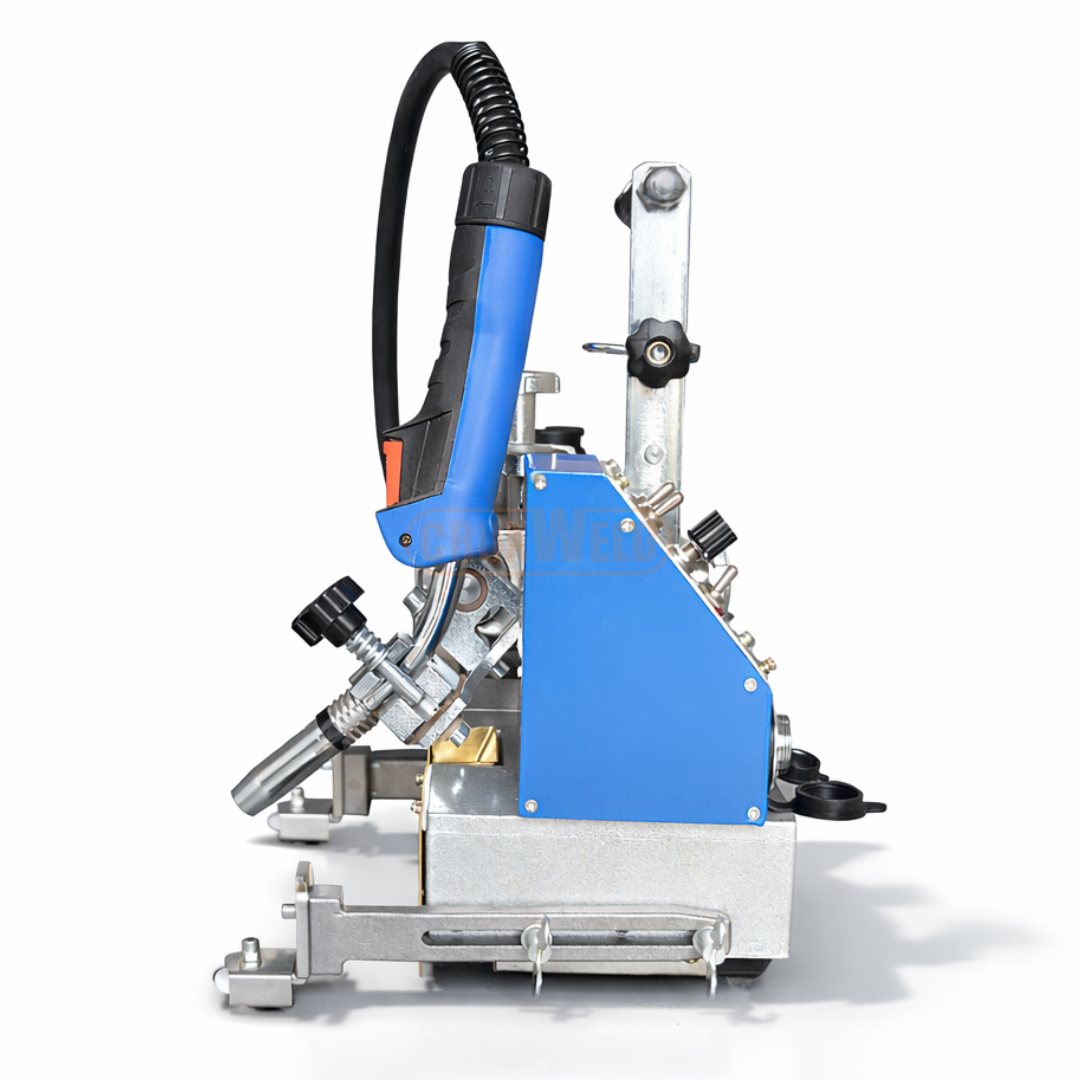
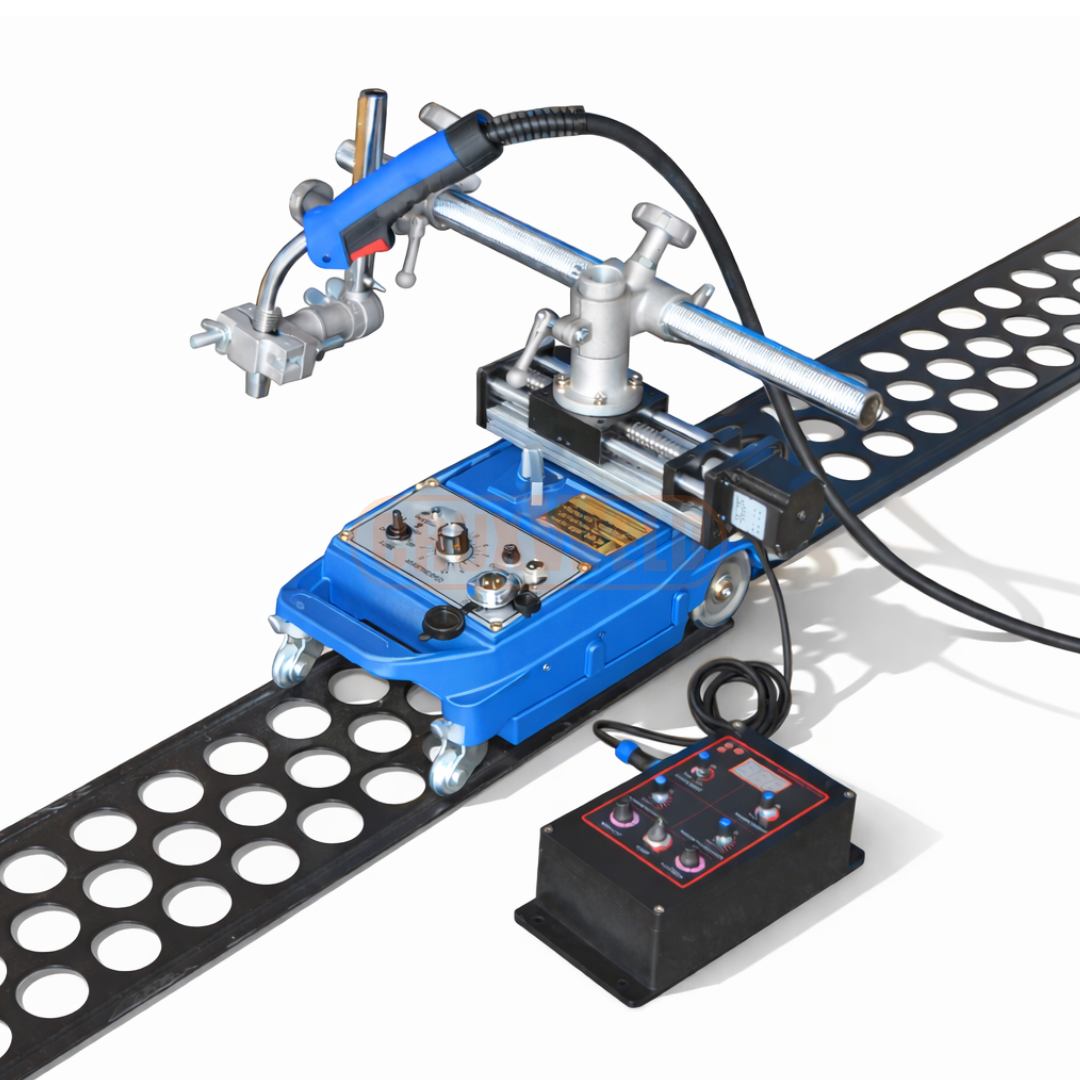
FIG. 1 — WeldyFi with MIG torch in the quick clamp
On site
▶ Full tour, sound on
Watch it weld
The WeldyFi on Real Fillets
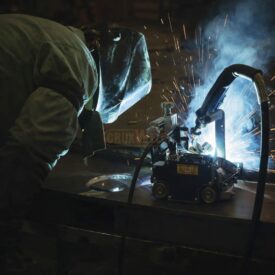
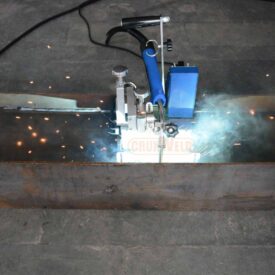
On the left, a fillet being welded on site. On the right, the full tour with sound, from stiffeners to long beam joints. What the videos show:
One lever switches the magnet on and off; 35 kg holding force on steel.
2
Welding gun holder
Quick clamp for torches of 16–25 mm; up/down angle 45° ± 10°, running angle ±10°.
3
X-Y adjustment slider
Screw-driven slide: 50 mm up/down and 50 mm left/right to place the wire in the root.
4
Electric box controller
Direction, speed, IDLE / AUTO / STOP and WELD / NON-WELD.
5
Welding gun interface
Two-core socket for the torch switch cable, so the carriage starts and stops the arc.
6
Power interface
Three-core socket fed from the regulated power supply unit.
7
Drive wheels
Four-wheel drive on solid, heat-resistant rubber tyres (wheels up to 70 °C).
8
Guide rollers
Brass rollers ride against the web plate and steer the carriage along the joint.
9
Handheld handle
Carry it from joint to joint in one hand.
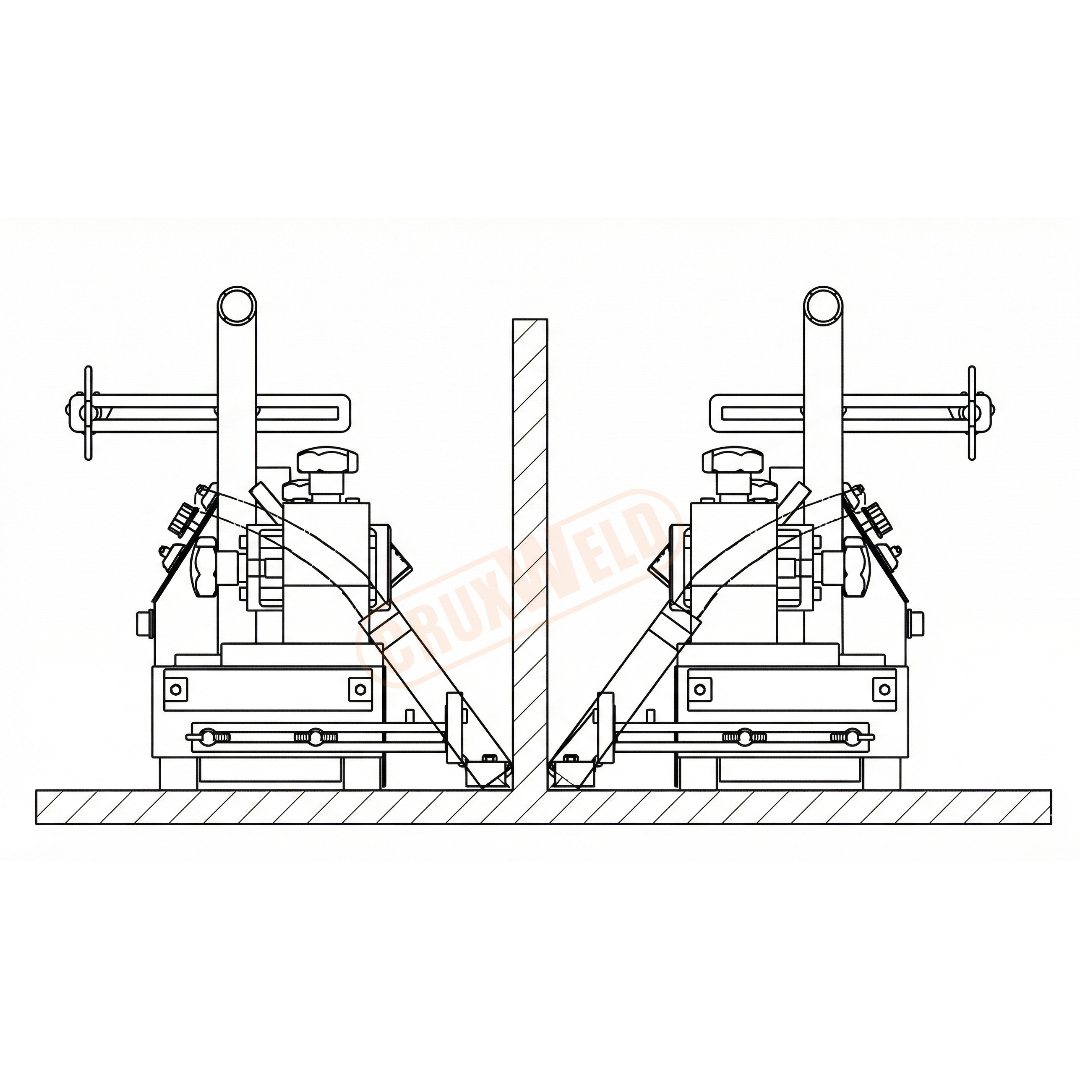
FIG. 2B — how the WeldyFi holds the line (cross-section)
Magnet lever 35 kg holding force on steelGuide rollers ride the web and steer itX-Y slide 50 × 50 mm to land the wire in the root
SHEET 03
Control box
Four Settings, Then Press AUTO
OPERATING STATE
IDLE · AUTO · STOP
AUTO starts travel and welding together; IDLE moves the carriage without welding; STOP halts everything.
DIRECTION
Forward · Backward
Weld in either direction without turning the carriage round.
SPEED
Speed knob, scale 0–14
Sets travel anywhere from 5 to 1100 mm/min.
WELDING STATE
WELD · NON-WELD
Dry-run the joint with the arc off to check the line, then switch to WELD.
END OF RUN Stop with the button, or place an obstacle at the end of the joint to trigger the inductive stop switch.
FIG. 3 — control box on the carriage
FIG. 3B — try the control box: tap a switch and watch the carriage
CRUXWELD WeldyFi
OPERATING STATE
WELDING
DIRECTION
SPEED · SCALE 0–14
END STOP
END STOP
AUTO + WELD. Travel and welding start together; the guide rollers keep it on the joint until the end stop.
AUTO + NON-WELD. Dry run: it travels the joint with the arc off so you can check the line first.
IDLE. The carriage moves without welding, so you can bring it to the start of the joint.
STOP. Everything halts. Press AUTO to run again.
SHEET 04
Joints & applications
Built for the Fillet, Comfortable Out of Position
FIG. 4 — fillet welds on both sides of a vertical web plate
Horizontal fillet
The everyday job: stiffeners, webs and flanges on flat plate.
45° inclined fillet
Working angle covers the full 360°.
Both sides of a web
Weld one side, turn the carriage round, weld the other.
V-groove, overhead, out of position
The magnet keeps it on steel in every position.
Typical work: stiffeners on deck and side panels, I-beam and H-beam fabrication, girders, frames, tanks and vessels — any carbon or low-alloy steel structure with long, repeated fillet welds.
Finished fillet bead
Welding on plate
Operator watches, carriage welds
SHEET 05
Starting settings
Where to Begin on a 6 mm Fillet
New to welding automation? These are the flush-fillet settings our technical team starts from with 1.2 mm wire on 6 mm plate. Strike the arc, watch the bead for the first few hundred millimetres and fine-tune travel speed on the knob.
✓Set the front guide arm slightly shorter than the rear, in the direction of travel, so the carriage hugs the web.
✓Place the wire in the root with the X-Y slide before you start.
✓Run once in NON-WELD to check the line.
Different plate or leg size? Send it on WhatsApp and we will suggest a starting point.
Four-wheel drive rubber tires, motor encoder with planetary gearbox
Traction
4-wheel drive, solid rubber tires
Motor
DC 110 V, 30 W, 4200 rpm
Guiding system
Fillet tacking guide roller
Ground clearance
5.5 mm
Max wheel heating allowed
70 °C
Magnet
Magnet type
Lifting handle integrated
Magnetic force
35 kg
Torch
Torch support
Universal with quick attach
Torch holder diameter
16 – 25 mm
Torch adjustment
50 mm up/down, 50 mm left/right
Up/down angle
45° ± 10°
Running angle
±10°
Working angle range
360°
Welding
Welding processes
MIG, MAG (CO2), FCAW
Welding method
Continuous welding
Types of welds
Fillet, V-groove, overhead, out of position
Workpiece
Magnetic steel (carbon and low-alloy steel)
Controls
Operating state
IDLE / AUTO / STOP
Direction
Forward / backward
Speed setting
Knob, scale 0 – 14
Welding state
WELD / NON-WELD
General
Power source
AC 110 – 230 V, 50/60 Hz
Power consumption
30 W
Dimensions (L × W × H)
220 × 280 × 230 mm
Weight
8.5 kg
Specifications are subject to improvement without notice; the quotation and test certificate supplied with the machine are the governing documents. Warranty terms are stated on the quotation / invoice.
A portable, trackless fillet welding carriage. It holds itself on steel with a lever-switched magnet, follows the joint on brass guide rollers and carries a MIG/MAG or flux-cored torch along the fillet at a steady 5–1100 mm/min.
Q2Does it need a track or rail?
No. The magnet keeps it on the plate and the guide rollers run against the web plate, so it follows the fillet without any track. Place it, lock the magnet and start.
Q3Which welding processes can it be used with?
MIG, MAG (CO2) and FCAW. The quick-attach clamp takes torches of 16–25 mm diameter, and a 5 m two-core cable connects it to your welding power source so the carriage starts and stops the arc.
Q4Can it weld vertical and overhead fillets?
Its weld types include fillet, V-groove, overhead and out-of-position welds, with a 35 kg magnetic force and a 360° working angle range. Typical jobs are horizontal fillets, 45° inclined fillets and fillets on both sides of a vertical web plate.
Q5How is the travel speed set?
With a knob on the control box, scale 0–14, covering 5–1100 mm/min. The motor runs with encoder feedback so the set speed holds along the joint. A forward/backward switch sets the direction.
Q6What materials can it weld on?
Magnetic steel — carbon steel and low-alloy steel — because the carriage holds on with a magnet.
Q7What is supplied with the WeldyFi?
The carriage, a regulated power supply unit, a 20 m power cord, a 5 m two-core torch control cable, three 3 A fuses, Allen keys (M3, M4, M5, M6) and a quality certificate.
Q8How do I get the WeldyFi price and delivery time?
Request a quote on this page or message +91 88008 82983 on WhatsApp with your plate thickness, joint and welding process. You will receive a GST quotation with delivery time, usually the same working day.
Send your plate, joint and process — we will suggest the set-up and quote today.